

Virtual Reality (VR) Training Solutions

virtual training solutions

Virtual
Reality

Trusted by fortune 500 Companies & leading startups globally

Biogas Plant - Digital Twin

Queppelin developed a digital twin of the biogas plant fitted with all the machinery required for its successful operation. The highly detailed model gave a real-life experience to run test simulations and train the employees.

It helped in identifying shortcomings or lacunae in the plant operation. Plus, the training sessions were conducted in the virtual plant for immersive and productive training.

The Outcome 

  • Better operations and maintenance for enhanced overall efficiency.
  • Focused, dedicated, and informed workforce. 
  • Higher Employee Happiness Index 
  • Higher employee retention.
  • Employee Safety Standards improved with the lowest ever record in mishaps.
vr training demo of biogas plant

VR Trainings, A Billion Dollar Niche

Virtual Reality Training is an immersive learning experience. The trainee is put into a 3D virtual scenario that simulates real-world situations. It is a safer and more efficient way of training on complex concepts that traditional training methodologies fail to cover. 

VR Training is about training for sound decision-making in a given scenario. It activates the suitable neural pathways, thus, reducing the chances of mistakes to a great extent when the actual situation arrives.

Did you know?

4x

It is 4 times faster to train people in VR than in classroom.

275%

more confident to apply skills learned after VR training.

3.75x

more emotionally connected to content than classroom learners.

enterprise virtual reality training

Enterprise VR Trainings

Enterprises can use VR training solutions to train their employees on tasks that are complex, asset-intensive, and may involve risk.

VR can be used to impart both hard skills and soft skills as per the job responsibilities. Employees can either be trained for hard skills like product demonstration, item handling, or operating tools and machinery. 

For soft skills training, they can be put through VR scenario training where they can learn skills like communication, empathy, problem-solving, team handling, and others.

The trainees just have to wear headsets and use controllers to navigate through the 3D environment and learn as per their job responsibilities. 

Queppelin helps you integrate VR training with advanced learning theories, data science, and 3D design into your business. Thereby, helping you reap unparalleled benefits like elevated employee performance, lowering risk of mishaps, faster and more efficient training programs, and so on.

Our VR training solutions help you measure performance through unique data and insights. Thus, you can streamline your program and bridge the gap between curriculum and actual work. As a result, you get a confident, dedicated, and well-prepared workforce.

enterprise vr training

Training Solutions in VR bring a lot of benefits to Enterprises

VR Training Benefits to Employees

VR training positively impacts the psychological well-being of employees. It infuses intrinsic motivation into them that keeps them enthusiastic, energetic, and elated towards their work for its inherent satisfaction rather than some separable consequence.

virtual reality icon

Emotional Connection

Simulation-based learning leads to meaningful experience and a sense of achievement. Hence, the trainee feels more emotionally connected to the skill. This also results in a long association with the organization.

virtual reality glasses

Faster Learning

3D virtual reality training sessions can lead to four-time faster learning with much higher retention than traditional training methods. They can understand complex concepts easily through 3D visualization and actively do it practically by themselves. Hence they learn fast and learn better.

vr glasses icon

Confident Workforce

The VR-trained employees could understand the situations better by going through the scenario multiple times. Hence, the workforce was more confident about their job performance.

VR Training Benefits to Enterprise

VR Training can develop a workforce to recon with. On one hand, the employees are better skilled in lesser time, on the other, the cost is reduced to a one-time investment. Hence, enterprises gain dual advantages with VR training solutions.

virtual reality glass

High Content Retention

VR simulated learning involves active learning with less distraction compared to traditional training methodologies. This combined with a higher engaging experience resulted in higher retention up to 90%.

virtual reality headset

Safest Training Environment

Virtual Reality Training solutions ensure that the trainees undergo the session in the safest environment. This holds criticality for the enterprises involved in endeavors involving risks and hazards like Chemicals, Electricals, Metallurgy, etc.

virtual reality glasses icon

Higher Trainee Engagement

VR Training engages the trainee with the maximum sense digitally possible for high-quality learning. VR-trained employees were up to four times more focused resulting in better learning outcomes.

money icon

Cost Reduction

VR Training are safe, optimized, and replayable leading to a tremendous cost-saving that is incurred in other training methods. Moreover, with technological advancements, VR is much more financially accessible than ever before.

virtual reality immersive experience

Improve Learning & Performance

VR Training solutions offer experiences closer to the real world that contribute a great deal to the skills and knowledge. The deficit in training is achieved by making trainees job-ready from day one on the floor.

team icon

Team collaboration

Through VR Training, employees can learn to collaborate with each other through collectively engaging in training sessions. This will improve teamwork, better communication, adaptability, leadership skills, and problem-solving among others.
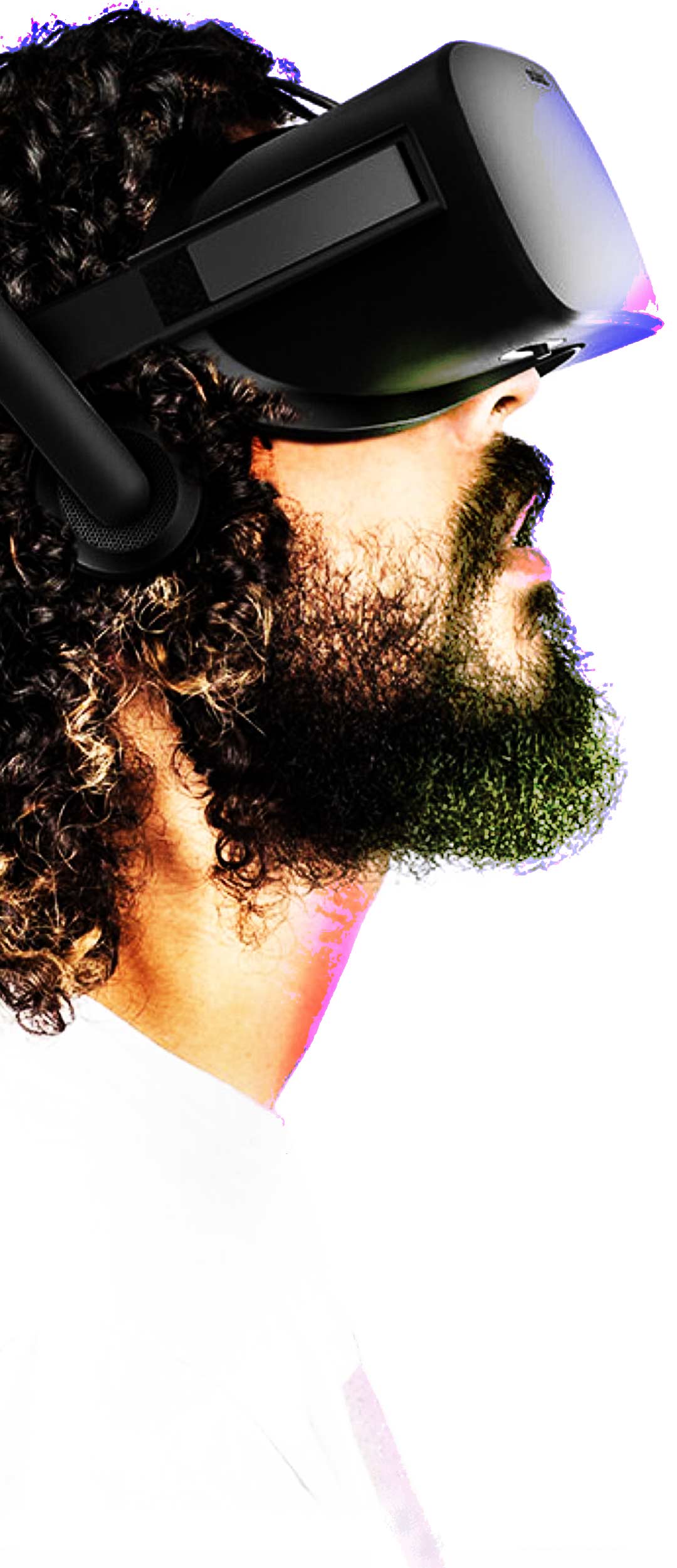
VR Training can be used by any Industry

Virtual Reality Training can have a range of applications. It can be used for simulating heavy, complex, and costly machines. Trainees can learn not to just operate but to maintain it as well. It can also be used for scenario-based training where trainees can learn hard as well as soft skills. In fact, Virtual Reality has no limits to its utility.

A good mix of knowledge, visualization, and support can make it apt for any industry and bring business leverage. While visualization can be yours, Queppelin can bring the other two components of knowledge and technical support to make it a reality. Here are some examples.

projects delivered
0 +
inhouse experts
0 +
of expertise
0 yrs
virtual reality glasses

Costs involved in developing a VR Training Programme

Developing a VR training program requires elaborate planning and execution. Determining the exact amount will not be a one size fits all game.

It depends on a lot of factors such as the production of content, the number of developers required, and the number and quality of headsets. Here we share all the processes required for the program development and have a bearing on the cost.

Our VR Training Development Process

1.

Course Design

The first step is of course designing. In VR, this process has to be exhaustive with more options and possibilities to consider for a dynamic experience.

2.

Research

The research is carried out to prepare the list of all the important functionalities for a complete training experience.

3.

Script

Then, the script is prepared to chart out the whole experience right from the point the trainee enters the experience to the point he completes the session.

4.

Talent Acquisition

As per the requirement, hiring is made for various tasks defined in the script.

5.

Creative / Video

Additional creative assets are created through our services like Illustration and graphics, video editing, and 3D modeling.

6.

Development

The VR experience is developed and coded on the basis of the 3D assets and script.

7.

Editing / Assembly

The additional assembly work is included in the VR to account for the exception paths.

8.

Testing

The program is tested to identify software anomalies.

9.

Logistics Setup

The required VR equipment such as the Head Mounted Devices, and headphones.

10.

Support

The required support-providing mechanism is set up for the post-deployment phase.

VR Training content types we can create for your Business

VR Training can be provided through either of the three modes of Virtual Reality. These modes vary in terms of their immersiveness as well as the hardware and software requirements.